
Central Asian Countries Pursue Infrastructure Projects Through Afghanistan Amid Regional Tensions
Despite ongoing tensions in South Asia, particularly between India and Pakistan as well as Afghanistan and Pakistan, Central Asian countries including Uzbekistan, Turkmenistan, and Kazakhstan are focusing on strengthening regional connectivity, access to Pakistan's Karachi and Gwadar ports, and links to South Asian markets.
Nargiza Umarova, a senior researcher at the Center for Central Asia and Caucasus Studies in Uzbekistan and manager at the Tashkent University of World Economy and Diplomacy's Institute of Advanced International Studies, wrote that landlocked Central Asia urgently needs Pakistan's transit capacities, especially its developed ports under China's Belt and Road Initiative. She noted that Karachi and Gwadar serve as alternative routes to the Indian Ocean.
The shortest route from Central Asia to Pakistan passes through Afghanistan. Thus, Uzbekistan, Turkmenistan, and Kazakhstan are advancing major infrastructure projects in Afghanistan despite border tensions between Afghanistan and Pakistan and challenging India-Pakistan relations.
Presidents of Kazakhstan and Uzbekistan recently visited Pakistan and signed multiple agreements on regional connectivity and trade expansion. Kazakhstan's ambassador to Pakistan announced that Astana is ready to fully fund the 'Western Trans-Afghan Railway' from Torghundi to Herat, Kandahar, Spin Boldak, and Chaman, with an estimated cost of $7 billion, a length of 687 kilometers, and completion within three years.
Umarova views this as Kazakhstan's determination to strengthen its position in the North-South Corridor, which includes existing routes via Iranian ports and emerging ones through Afghanistan. Astana also supports Uzbekistan's 2018-proposed 'Kabul Corridor' (Termez-Naibabad-Meydan Shahr-Logar-Kharlachi). A trilateral agreement for a joint feasibility study was signed in January 2025, approved by Uzbekistan on February 4, 2026, and field studies were agreed with Pakistan.
This project creates a new trade route from north (Kazakhstan, Uzbekistan) to south (via Afghanistan and Pakistan), providing the fastest land link between Europe, Russia, and South Asia. Tashkent proposed a multimodal rail-road corridor from Belarus, Russia, Kazakhstan, Uzbekistan, Afghanistan, and Pakistan, three times shorter than sea routes. Completion of the Kabul Corridor would form a 5,532-kilometer rail route to South Asia.
Estimates suggest Kazakhstan and Uzbekistan could each handle up to 20 million tons of additional annual transit cargo, with Kyrgyzstan and Tajikistan each around 5 million tons, mainly Chinese goods.
During Kazakh President Kassym-Jomart Tokayev's visit to Pakistan on February 3-4, 2026, transit from Belarus to Pakistan and the Turkmenistan-Afghanistan-Pakistan railway corridor were discussed. Kazakhstan joined the Torghundi-Spin Boldak railway in 2024 at Turkmenistan's invitation, signed an MoU with Kabul in January 2025, and allocated $500 million initially for the Torghundi-Herat section and a northern logistics center. This commitment has now expanded to the full Western route budget.
Umarova links Kazakhstan's growing interest to progress on the 1,840-kilometer TAPI gas pipeline (Turkmenistan-Afghanistan-Pakistan-India). Construction of Afghanistan's section began in December 2024 and is expected to reach Herat by the end of 2026. Russia is closely monitoring TAPI as an opportunity to diversify energy exports post-Europe access reduction. Kazakhstan stands to profit from both gas transit and rail cargo, as the routes complement each other.
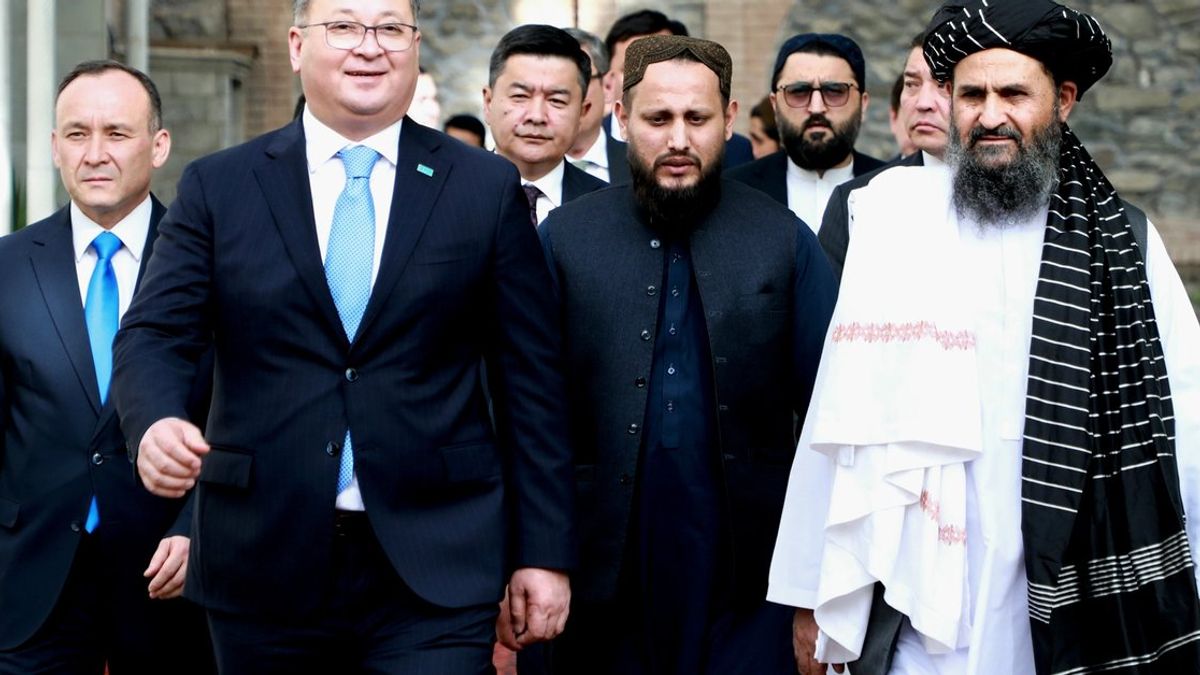
On February 1, 2026, in Herat, Taliban Deputy Prime Minister for Economic Affairs Abdul Ghani Baradar met Rashid Meredov.
Know more about this story?
If you have additional information or believe something is inaccurate, let us know. Your tips help us stay accurate.
More in International
UN Secretary-General Guterres: India a model for simultaneous industrial and clean energy development

Amnesty International warns Trump's attacks on judges threaten judicial independence

Moldova Bans Afghan Airlines from Flights in Updated Safety List
Greece, Germany, Netherlands, Austria and Denmark agree to establish migrant return centers outside EU
 Reliable
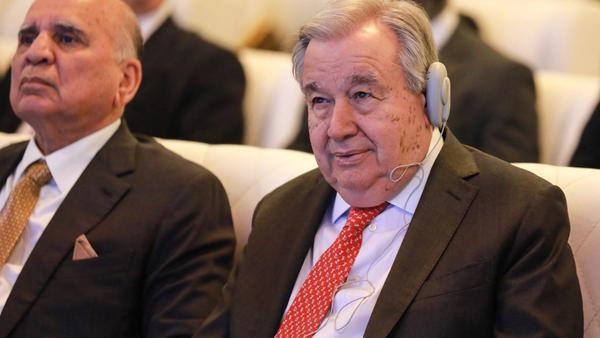
UN Secretary-General Guterres: India a model for simultaneous industrial and clean energy development
UN Secretary-General Antonio Guterres praised India as a model for balancing industrial growth with clean energy expansion, urging a fair and rapid global transition to combat climate change without hindering development.
 Reliable
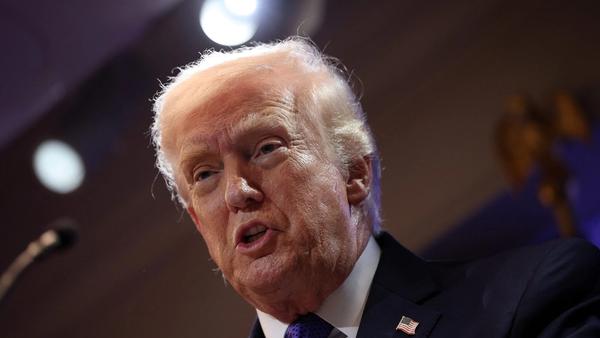
Amnesty International warns Trump's attacks on judges threaten judicial independence
Amnesty International USA warned that U.S. President Donald Trump's attacks on judges threaten judicial independence and the rule of law, urging Congress to protect the judiciary.
 Reliable
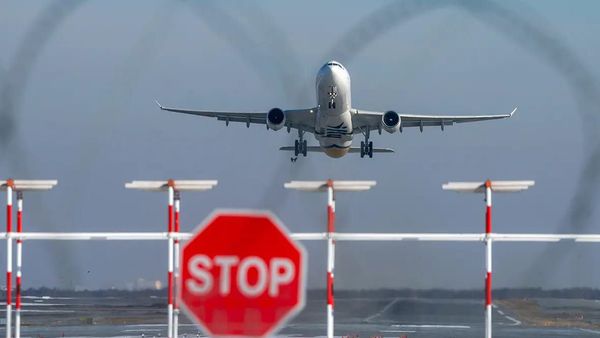
Moldova Bans Afghan Airlines from Flights in Updated Safety List
Moldova has banned Afghan airlines, along with carriers from Russia and other countries, from flying to its territory due to non-compliance with international safety standards, aligning with an EU list.
 Reliable
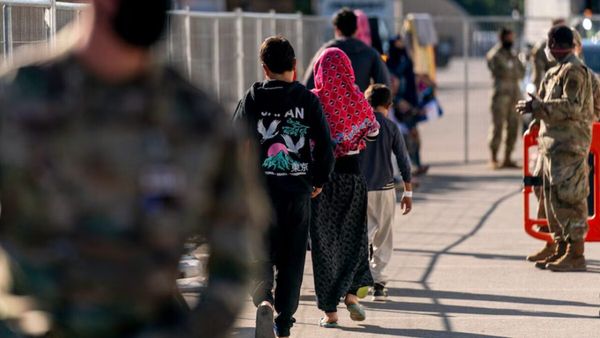
Greece, Germany, Netherlands, Austria and Denmark agree to establish migrant return centers outside EU
Greece is partnering with Germany, the Netherlands, Austria and Denmark to establish migrant return centers outside the EU, likely in Africa, as announced by Migration Minister Thanos Pleuris. The initiative aims to handle rejected asylum seekers and includes upcoming talks with Pakistan on returns amid declining illegal entries to Greece.