
WHO Warns Failure to Vaccinate Returnee Children in Afghanistan Raises Disease Outbreak Risk
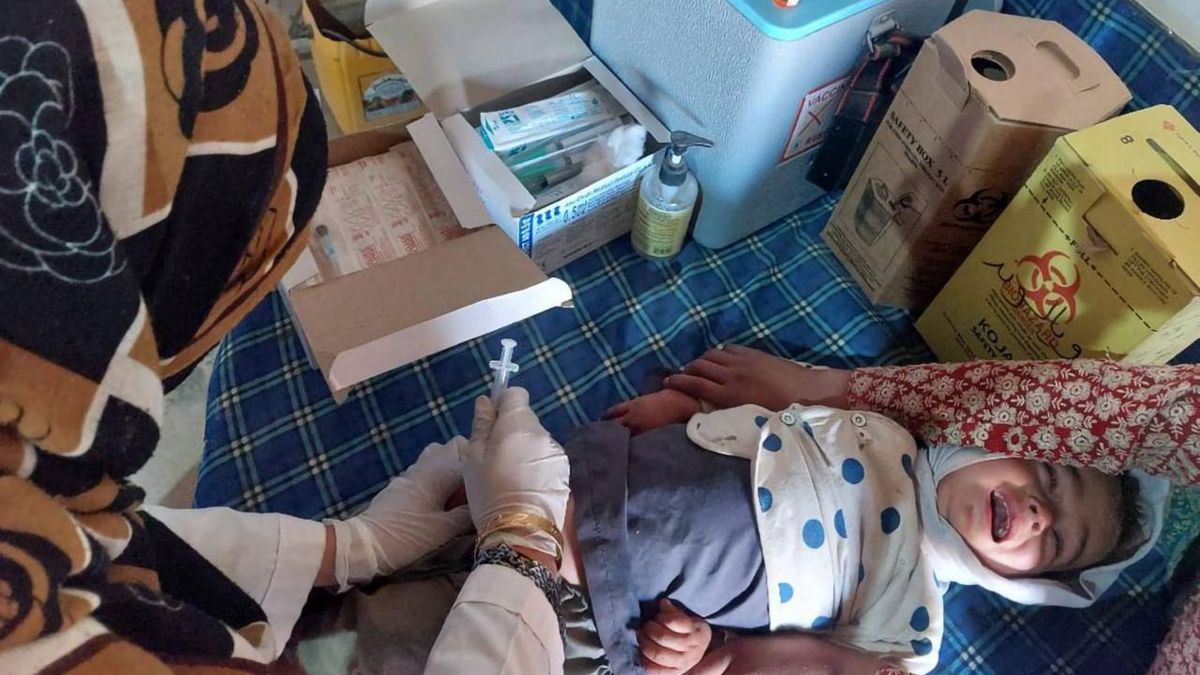
KABUL (Afghan Verified) -- The World Health Organization (WHO) has stated that numerous children returning to Afghanistan have yet to receive any vaccinations, heightening the risk of disease outbreaks and posing a threat to public health in the country.
In a report issued on Sunday, February 15, WHO noted that through primary health care services and identification of returnee children, it has registered them in Afghanistan's National Vaccination System and administered vaccines.
Registering children in the system and issuing vaccination cards not only protects them from deadly diseases but also improves families' access to health services, the report said.
Dr. Edwin Ceniza, WHO representative in Afghanistan, said: "With the active participation of the community and continuous support for health services, we can ensure that no child is left without care."
WHO stressed the importance of reaching unvaccinated children among returnee families to prevent outbreaks of dangerous diseases such as measles and polio, and to safeguard the most vulnerable populations.
More in Society

Turkish author says Taliban penal code endorses family violence, gender-based violence

Afghan Kun Khmer athletes win five medals at world championships
UN OCHA: Mental Health Activities Banned in Afghanistan
UNICEF: Assisted More Than 20 Million People in Afghanistan in 2025
 Developing
Turkish author says Taliban penal code endorses family violence, gender-based violence
Turkish author Elif Shafak condemned the Taliban's new penal code as creating a system of slavery and endorsing violence against women, children, and the poor. Local sources reported the first implementation in Badghis province amid ongoing criticism.
 Reliable
Afghan Kun Khmer athletes win five medals at world championships
Afghan Kun Khmer athletes won two silver and three bronze medals at the sixth World Championships in Cambodia, finishing 13th overall.
UN OCHA: Mental Health Activities Banned in Afghanistan
UN OCHA reports that mental health and psychosocial support activities are banned in Afghanistan, heavily impacting women who rely on these services. Humanitarian access constraints persist at medium severity in 60% of districts amid Taliban interference and restrictions on female aid workers.
 Reliable
UNICEF: Assisted More Than 20 Million People in Afghanistan in 2025
UNICEF reported providing aid to over 20 million people in Afghanistan in 2025, including 11 million children, focusing on education, health, water, nutrition, and psychosocial support.