
UN OCHA: Mental Health Activities Banned in Afghanistan
The United Nations Office for the Coordination of Humanitarian Affairs (OCHA) states that activities related to mental health and psychosocial support are currently banned in Afghanistan.
Women heavily rely on these services in social spaces, but they now face restrictions or complete halts, according to OCHA's latest Humanitarian Access Snapshot report.
The eighth round of severity mapping, involving UN agencies, international and national organizations, and humanitarian cluster leads, found no districts classified as high severity access constraints, down from nine in the previous round. Medium severity affects 242 districts (60% of total), while low severity covers 159 districts (40%). Compared to the seventh round, medium severity areas increased from 234 to 242.
Key barriers include restrictions on female staff and gender-sensitive programs, bureaucratic and administrative obstacles, interference by de facto authorities, and socio-economic and demographic pressures. Restrictions on women's access to essential health services persist.
Despite relative improvements in physical access since August 2021 due to reduced armed conflict, these gains are offset by heightened administrative restrictions and interference in humanitarian operations. Bans on female aid workers in non-health and non-education sectors have tightened, and women require a male mahram in some areas to visit clinics. Work permits for health and education staff remain difficult to obtain, with mobile phone use banned for female health workers in certain regions.
Humanitarian staff face stops at checkpoints, demands for additional documents post-field visits, temporary arrests, and harassment. House-to-house polio vaccinations are not permitted. Taliban interference accounted for 85% of recorded incidents, with gender-related restrictions comprising 31%.
Arrests of 34 humanitarian workers (18 men, 16 women) mark a 66% decrease from 100 in the prior period, though OCHA notes ongoing security risks. In one area, partners reported female staff being pursued by unknown armed individuals. Environmental challenges like floods, military operations, and explosive contamination, particularly in eastern and southeastern regions, further hinder access.
More in Society

Turkish author says Taliban penal code endorses family violence, gender-based violence

Afghan Kun Khmer athletes win five medals at world championships
WHO Warns Failure to Vaccinate Returnee Children in Afghanistan Raises Disease Outbreak Risk
UNICEF: Assisted More Than 20 Million People in Afghanistan in 2025
 Developing
Turkish author says Taliban penal code endorses family violence, gender-based violence
Turkish author Elif Shafak condemned the Taliban's new penal code as creating a system of slavery and endorsing violence against women, children, and the poor. Local sources reported the first implementation in Badghis province amid ongoing criticism.
 Reliable
Afghan Kun Khmer athletes win five medals at world championships
Afghan Kun Khmer athletes won two silver and three bronze medals at the sixth World Championships in Cambodia, finishing 13th overall.
 Reliable
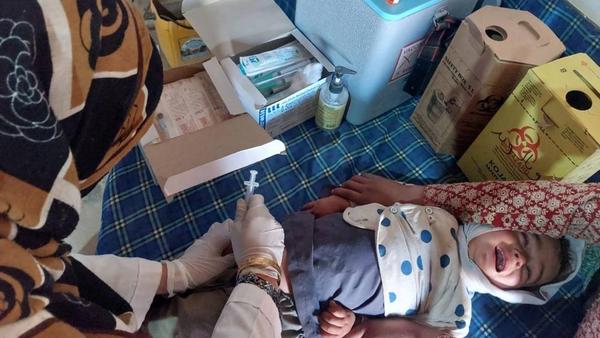
WHO Warns Failure to Vaccinate Returnee Children in Afghanistan Raises Disease Outbreak Risk
The World Health Organization warns that unvaccinated children returning to Afghanistan increase the risk of disease outbreaks like measles and polio, urging registration in the national vaccination system.
 Reliable
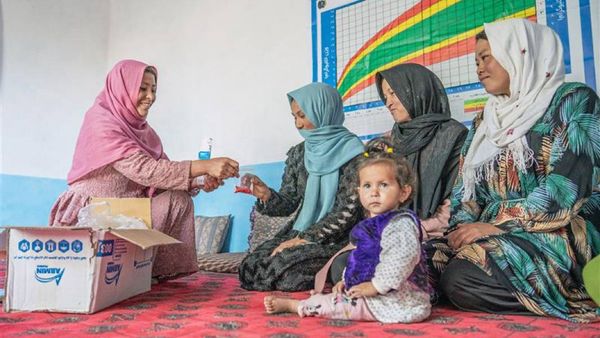
UNICEF: Assisted More Than 20 Million People in Afghanistan in 2025
UNICEF reported providing aid to over 20 million people in Afghanistan in 2025, including 11 million children, focusing on education, health, water, nutrition, and psychosocial support.