
SOCIETY — June 16, 2026
UNICEF Report Finds More Than 8.8 Million Children in Afghanistan Face Climate Hazards
More than 1.7 million children are at risk of riverine flooding, and the hazards are compounding malnutrition while disrupting health, nutrition and education services.
The Ehtebar Desk — originates with Amu TV — corroborated by Afghanistan International — 2 min read
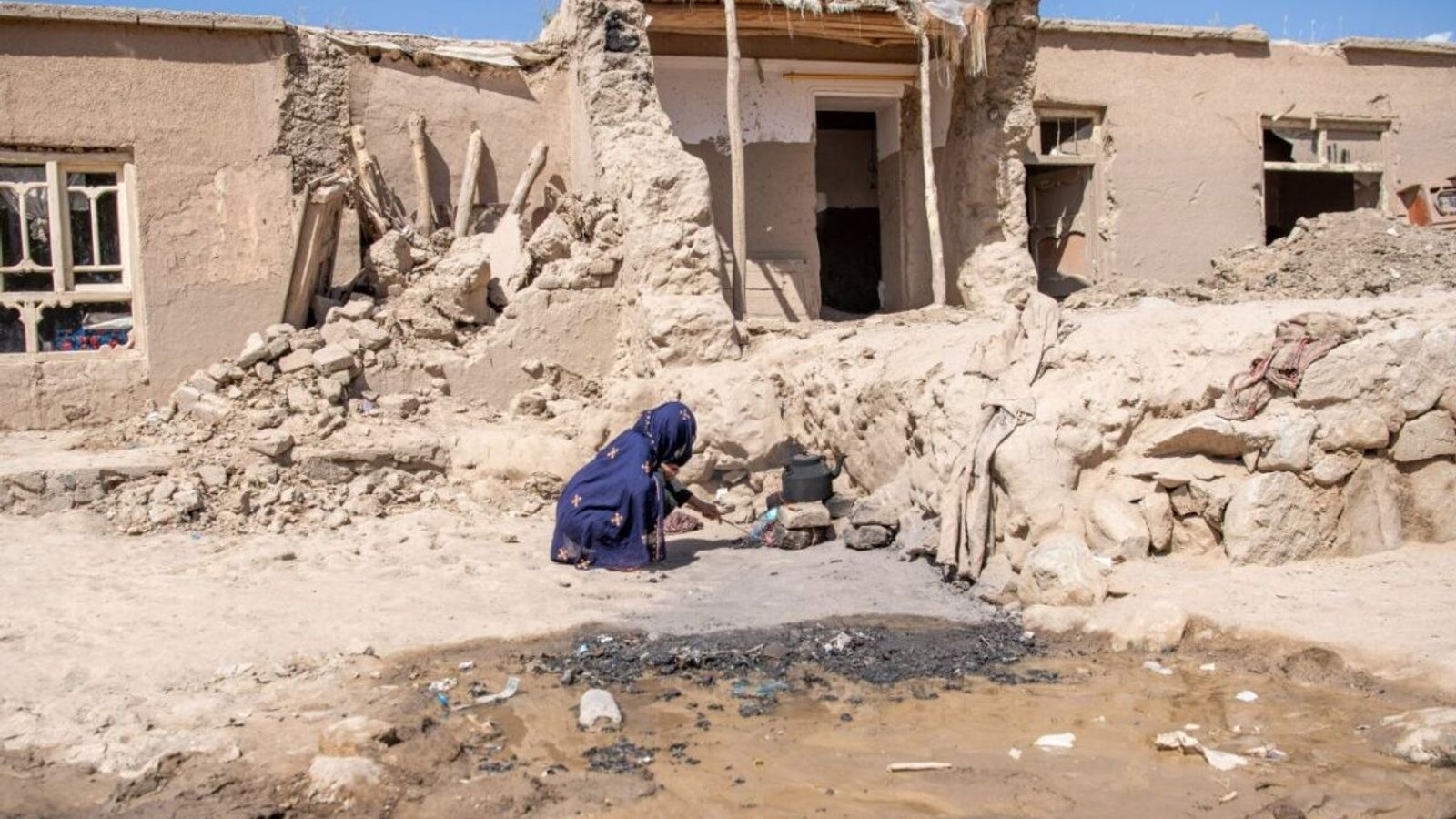
UNICEF's Children's Climate Risk Index 2026 report states that 41 percent of Afghanistan's approximately 21 million children, or more than 8.8 million, face at least three simultaneous climate hazards including drought, floods, heatwaves and dust storms.
The country registers the highest level of child vulnerability to climate hazards in South Asia, driven by gaps in essential services. More than 1.7 million children are at risk of riverine flooding, while additional exposure data show more than 75 percent of children affected by drought and more than 50 percent by prolonged severe heat waves.
These hazards are worsening acute malnutrition, with millions of children under five requiring treatment. They also disrupt health, nutrition, water, education and protection services critical to children's survival and development.
Tajuddin Oywale, UNICEF representative in Afghanistan, said children live on the front lines of the climate crisis. The report calls for urgent international investment to strengthen climate-resilient health, nutrition, water, education and social services.
Read the original reporting at Amu TV →
Reliability assessment
Two independent outlets corroborate the core event of the UNICEF report release with consistent key statistics (41% of 21M children, 1.7M flood risk, highest South Asia vulnerability) and direct attribution to the named UNICEF report and representative. Minor numerical phrasing differences and extra details in one source do not undermine the corroborated facts.
The source language mixes facts with framing or advocacy wording. Afghanistan International: "what makes this situation even more dangerous is the coincidence of climate hazards with high child vulnerability"; "deep gaps in essential services"; these phrases use emotionally charged language to emphasize severity and urgency beyond neutral reporting.
Independent web corroboration
An independent web search turned up no separate corroborating reports. Treat the account as single-sourced until more outlets pick it up.
Across the newsrooms
Where reports agree
- UNICEF 'Children's Climate Risk Index 2026' report published Tuesday identifies 41% of ~21 million Afghan children (~8.8-9 million) at risk from combined climate hazards.
- More than 1.7 million children at risk of riverine floods.
- Afghanistan has the highest child vulnerability in South Asia due to weak basic services.
- Climate hazards increase risks of malnutrition and disrupt health, nutrition, water, education, and protection services.
- Report calls for investment in climate-resilient services.
Where reports differ
- Exact phrasing of total at-risk children: 'Nearly 9 million' vs 'more than 8.8 million'.
- Source 2 provides additional specific exposure rates (75% drought, 50% heat waves) not mentioned in Source 1.
- Source 1 includes a direct quote from UNICEF representative Tajuddin Oywale not present in Source 2.
Filed by 2 outlets
Amu TV
Originating
Reported straight
Reported straight
Afghanistan International
Framed
Framed
Filed under
Society — UNICEF, Afghanistan, Climate Change, Children, Malnutrition
Spotted an error or have more on this story? Tip the desk on Telegram → or WhatsApp →.
Reader supported
Keep Ehtebar running
Every published story uses paid tools to translate reporting, compare sources, extract claims, and produce a clearer read on Afghanistan. Reader support helps keep that work independent.
€5
helps cover daily verification runs
€15
supports a week of source comparison
€50
keeps independent analysis moving
More in Society
Afghanistan's Shia Ulema Council Urges Taliban to Ensure Security for Ashura Ceremonies
— Reliable

Futsal Tournament Among 14 Teams Concludes in Sar-e-Pul
— Reliable
Ghazni municipality begins construction of four-kilometer paved road project
— Reliable

Red Crescent Sports Club Wins 11th Kabul Volleyball Cup
— Reliable