
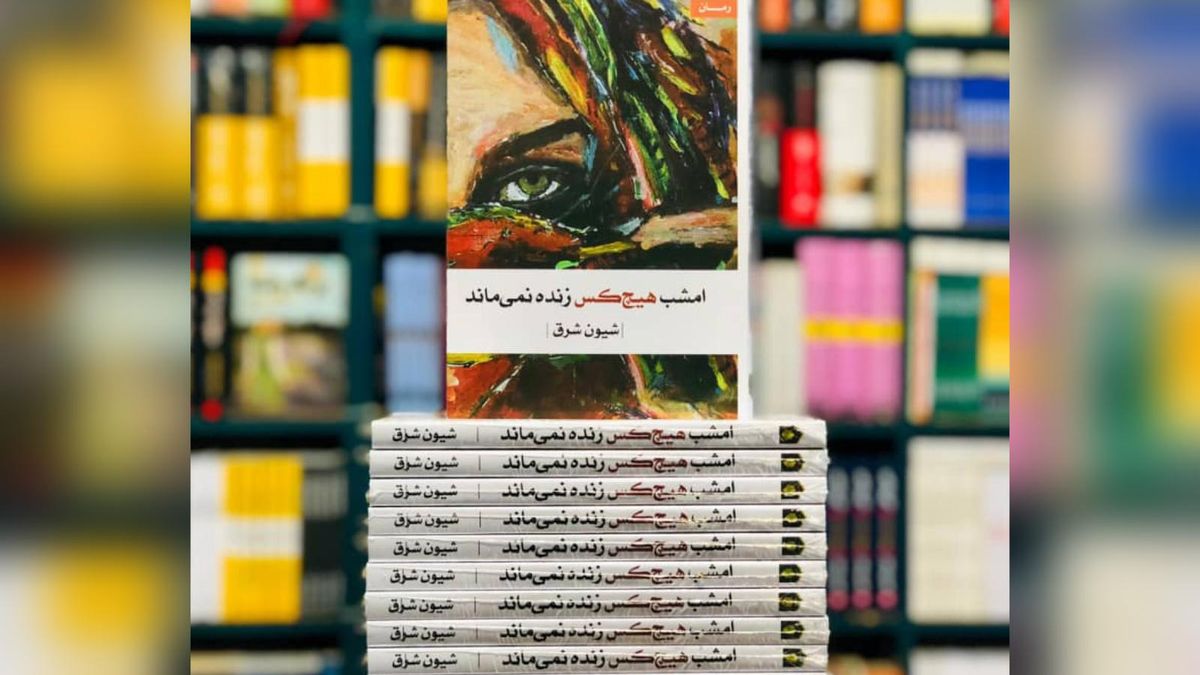
Review of Shiun Sharq's Novel 'No One Survives Tonight' Critiques Patriarchy
A new novel titled 'No One Survives Tonight' by Shiun Sharq has been published in Kabul by Parand Publications, spanning 252 pages. The book presents a poetic, tragic, and multi-layered narrative of the bitter fate of a woman named Masihah against the backdrop of Afghanistan's turbulent history.
The story intertwines Masihah's personal life with major historical events, including civil wars, the Soviet occupation, poverty, migration, and political instability. Elements such as Kaka Akbar's memories of the Panjshir wars and love letters exchanged amid bombings illustrate these connections.
At its core, the novel offers a critique of patriarchy, portraying women like Masihah, Fazila, Laila, and Mitra as victims marginalized and stripped of agency. Concepts such as 'kinchni,' 'namus,' and 'luck' serve as tools for control and humiliation. Masihah's mother embodies a complex figure, both victim and enforcer of these norms, as seen in her statement during a marriage proposal: 'I don't have the heart of a lion to hand my daughter over to a stranger,' followed by her compliance.
Masihah is depicted as introspective and questioning, doubting religious beliefs and traditions, such as the story of fire and Abraham, while seeking escape from oppression. Her name symbolizes suffering and unattained salvation.
Key symbols include the khisar tree, a site for forbidden love, past connections, and collective female memories, which eventually dries up; Masihah buries her dead son beneath it.
The prose features poetic imagery, metaphors, short sentences, repetitions, and temporal overlaps, creating a dreamlike, nightmarish atmosphere. Flashbacks deepen the narrative but occasionally confuse the main storyline or disrupt rhythm, such as the extended episode of Kaka Akbar's letters to Gulbahar.
The review notes the pervasive bitterness and lack of sustained hope, even in births, culminating in a closed, tragic ending aligned with the novel's tone. Despite some narrative complexities and heavy pessimism, the work is described as impactful, addressing women's suffering, historical violence, and erosion of individuality in traditional society, with both local Afghan and universal relevance. The non-linear structure, blending flashbacks, memories, and dreams, reflects trauma from war and suppression.
More in Culture

Afghanistan Football Champions League ranks 40th among Asian leagues

French President Macron Accepts Louvre Director's Resignation After Jewelry Theft

Iranian poet Ali Baba Chahi dies at 83

Richard Pybus appointed as head coach of Afghanistan's national cricket team
 Reliable
Afghanistan Football Champions League ranks 40th among Asian leagues
The Asian Football Confederation's latest ranking places Afghanistan's Football Champions League 40th out of 47 member countries, with only seven leagues ranked lower. The top spots are held by Saudi Arabia, Japan, and South Korea, while leagues from Brunei, Sri Lanka, Yemen, East Timor, Pakistan, Guam, and Northern Mariana Islands rank below Afghanistan.
 Reliable
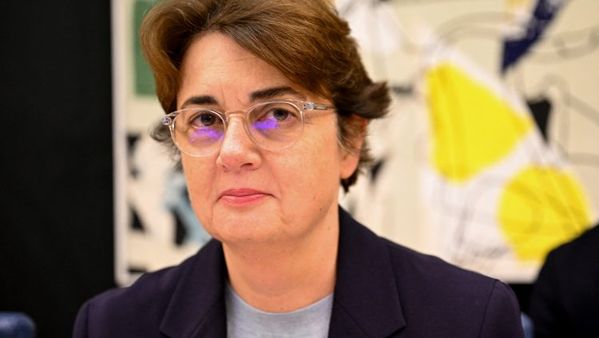
French President Macron Accepts Louvre Director's Resignation After Jewelry Theft
French President Emmanuel Macron accepted the resignation of Louvre director Laurence Des Cars after a $102 million jewelry theft exposed security flaws and amid ongoing staff strikes. Macron called the move a responsible step for the museum's stability.
 Reliable
Iranian poet Ali Baba Chahi dies at 83
Iranian poet and literary critic Ali Baba Chahi died at 83 from cardiac arrest in Karaj, as confirmed by the director of a documentary about his life and his daughter. Known for his impact on Persian poetry, his works had followers in Afghanistan.
 Reliable
Richard Pybus appointed as head coach of Afghanistan's national cricket team
The Afghanistan Cricket Board has appointed Richard Pybus, a veteran British coach with experience leading West Indies, Pakistan, and others, as the new head coach of the national cricket team ahead of a March 2026 series against Sri Lanka.