

National Statistics and Information Authority Extends Non-Presence Services for Expatriate Afghans by One Month
The National Statistics and Information Authority has informed all expatriate Afghans that the non-presence services for obtaining paper citizenship identity cards will remain available through their relatives in the country for an additional one month period. This extension allows current procedures to continue without immediate changes.
However, the authority has made it clear that following the conclusion of this one month, a new procedure will be implemented. Applicants will be required to first obtain official verification of their foreign documents from Afghan embassies and consulates located in their countries of residence. These diplomatic missions will then work directly with the National Statistics and Information Authority using official governmental channels.
Specific services that will require this step include applying for a new identity card, performing any verifications, updating photographs, and making corrections to personal information such as age, birth date or name.
To initiate the verification process, individuals must submit their passport, their identity card and their residence permit to the embassy or consulate for thorough checking of both the documents and the person's presence.
Once this is completed, the embassy or consulate prepares an official letter that includes a specific document registration number. This letter is then dispatched to the Ministry of Foreign Affairs. Officials at the Ministry of Foreign Affairs will review and evaluate the provided materials before sending them on through family members or relatives back to the National Statistics and Information Authority for final processing.
Additionally, the same verification standards will be applied to any in-person applications that rely on foreign documents matching the original records once the extension period ends. The coordinated approach between the National Statistics and Information Authority and the Ministry of Foreign Affairs is intended to ensure proper documentation and authenticity for all Afghan citizens regardless of their location.
Know more about this story?
If you have additional information or believe something is inaccurate, let us know. Your tips help us stay accurate.
Sources (1)
More in Society
Islamic Emirate Ministry Resolves 42 Women's Cases

Public Health Minister Emphasizes Self-Sufficiency and Improvement of Health Services
WHO Reports 21 Polio Cases in Afghanistan in 2025
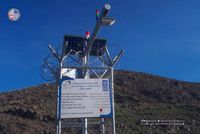
Three Early Flood Warning Systems Installed in Kandahar
 Reliable
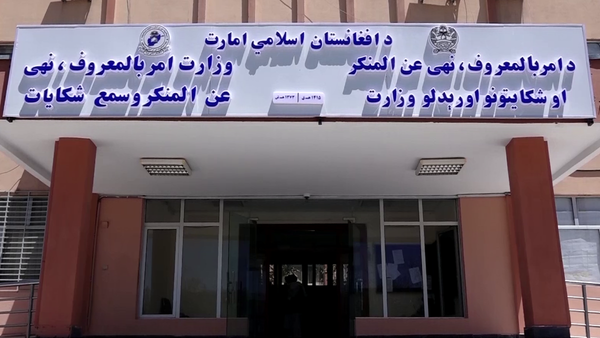
Islamic Emirate Ministry Resolves 42 Women's Cases
The Ministry of Promotion of Virtue and Prevention of Vice resolved 42 women's cases from early Hamal 1405 to the 29th, most involving forced marriages. The Supreme Court handled 790 women's rights cases in the past six Hijri months, primarily related to inheritance and property.
 Reliable
Public Health Minister Emphasizes Self-Sufficiency and Improvement of Health Services
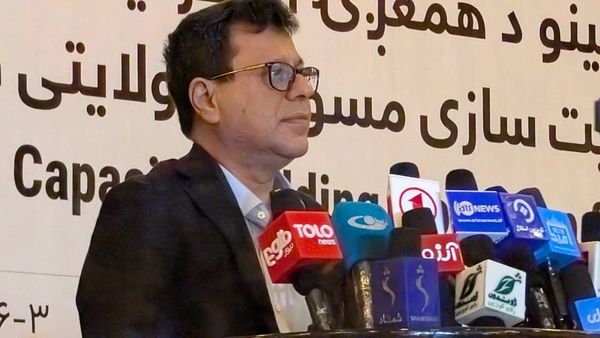
Noor Jalal Jalali, Minister of Public Health of the Islamic Emirate of Afghanistan, criticized budget mismanagement in provincial hospitals and called for self-sufficiency during a four-day meeting in Kabul with UNICEF and WHO. The event also addressed past achievements, current challenges and polio eradication efforts, with global cases reported at 56 in 2025, mostly in Afghanistan and Pakistan.
 Reliable
WHO Reports 21 Polio Cases in Afghanistan in 2025
The WHO's representative in Afghanistan, Dr. Khushhal Zaman, has reported 21 polio cases in the country for 2025, along with 56 cases across Afghanistan and Pakistan the previous year. He called for sustained joint efforts to vaccinate children in the southern and southwestern regions to eradicate the disease.
 Reliable
Three Early Flood Warning Systems Installed in Kandahar
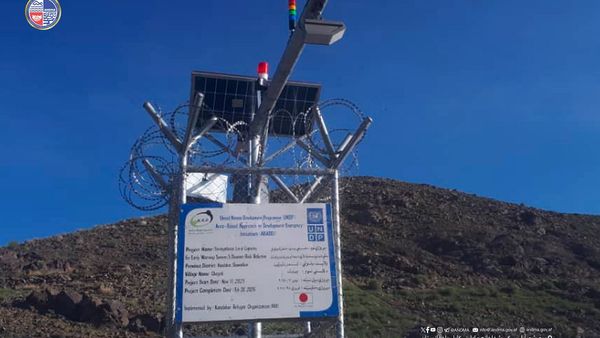
The Disaster Preparedness Department in Kandahar Province, supported by the KRO Institute, installed three early flood warning systems in Spin Boldak and Shawalikot Payin districts. Five individuals were trained to operate the systems, which monitor water levels and speed before activating sirens to alert residents and reduce flood risks.