
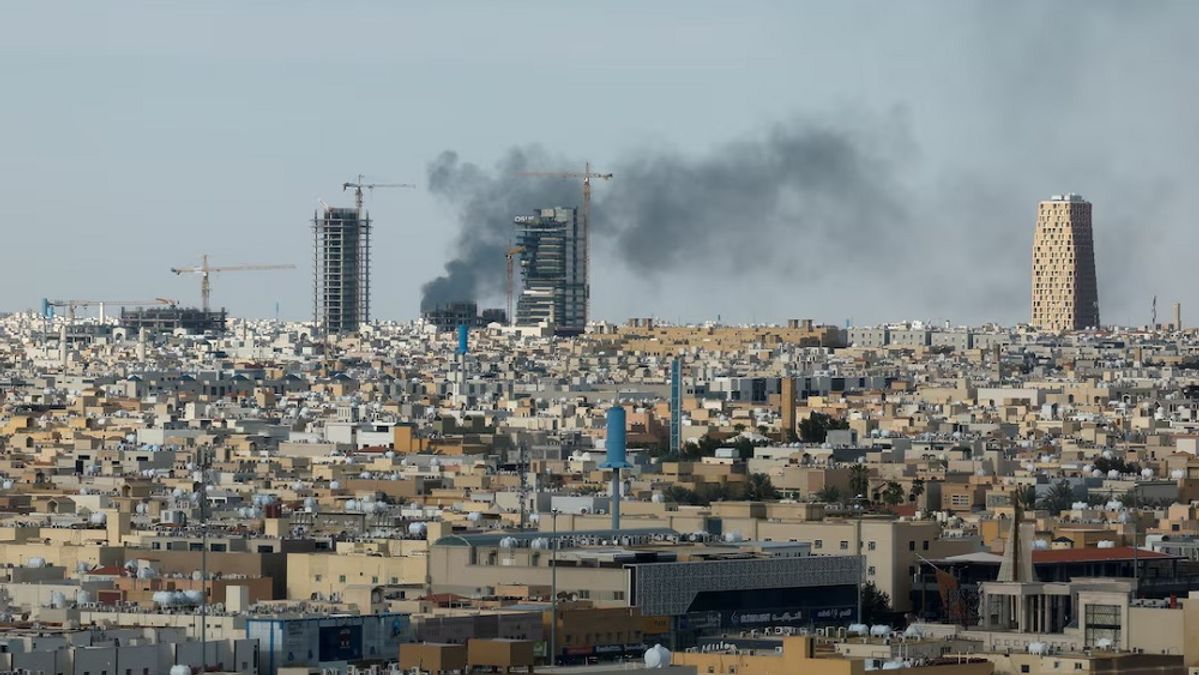
Saudi Arabia Warns Iran of Reciprocal Response if Attacks Continue
Saudi Arabia has warned Iran to refrain from attacking the kingdom, stating it may respond reciprocally if such attacks persist. Four informed sources told Reuters that Riyadh supports diplomatic resolution of tensions between Iran and the United States.
The message preceded a Saturday speech by Iranian President Masoud Pezeshkian, in which he apologized to Gulf neighbors for Iran's attacks on civilian targets. Two days earlier, Saudi Foreign Minister Faisal bin Farhan held a phone call with Iranian Foreign Minister Abbas Araghchi to clearly convey Riyadh's stance.
Sources indicated Saudi Arabia backs mediation efforts to de-escalate tensions and achieve a negotiated solution. Saudi Arabia and other Gulf countries have not allowed use of their airspace or territory for U.S. attacks against Iran. However, the Saudi foreign minister warned that continued Iranian attacks on Saudi soil or energy facilities could prompt Riyadh to permit U.S. forces access to its bases and to respond militarily.
Since U.S. and Israeli military operations against Iran began on February 28, Saudi Arabia has maintained regular contacts with Tehran via its ambassador. Last week, the United Arab Emirates, Kuwait, Qatar, Bahrain and Saudi Arabia faced extensive Iranian drone and missile attacks. On the war's first day, Iran's Supreme Leader Ayatollah Ali Khamenei was killed, prompting Iranian strikes on Israel and countries hosting U.S. bases.
Pezeshkian stated Iran's interim leadership council decided to halt attacks on neighbors unless provoked. Some Iranian military commanders maintain U.S. and Israeli regional bases as primary targets.
Mohammad Mehdi Mirbagheri, an Iranian Assembly of Experts member, said a majority consensus on Khamenei's successor exists, though obstacles remain. Iranian media reported debate over whether a final decision requires an in-person meeting. Mohsen Heydari Al-Kashef, another member, deemed an in-person vote unfeasible, citing Khamenei's guidance for a leader "hated by enemies." He noted the U.S., dubbed the "Great Satan," mentioned the successor's name; U.S. President Donald Trump recently called Mojtaba Khamenei an "unacceptable" choice.
Entering its second week, the U.S.-Israel conflict with Iran saw Trump demand Iran's "unconditional surrender." Pezeshkian announced mediation attempts, but Trump insisted on social media only surrender terms, promising post-surrender economic aid under an "acceptable" leader. Conflicts have disrupted global markets, with Iranian strikes on Israel and Gulf hosts, and Israeli attacks on Beirut displacing hundreds of thousands.
More in International
Countries issue joint statement on worsening human rights in Afghanistan at UN Security Council

Australia Grants Asylum to Five Iranian Women Footballers After Leaving Team Hotel

Afghanistan-Sri Lanka cricket series postponed amid Middle East conflict

Global Reach Supports US Designation of Afghanistan as 'Country of Unjust Detentions' to Pressure Taliban
 Reliable
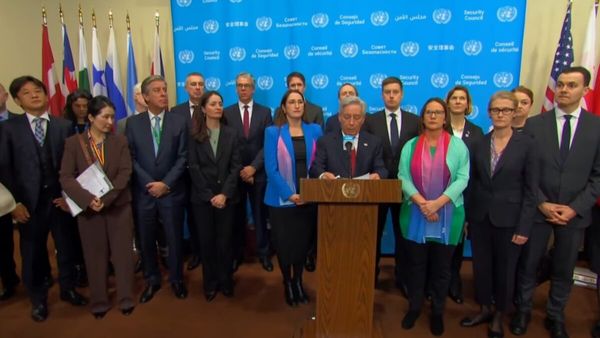
Countries issue joint statement on worsening human rights in Afghanistan at UN Security Council
At a UN Security Council meeting on March 10, 2026, multiple countries issued a joint statement condemning worsening human rights in Afghanistan, particularly restrictions on women and girls under Taliban policies. Other members addressed escalating Afghanistan-Pakistan border clashes, urging dialogue amid accusations of cross-border militant threats.
 Reliable
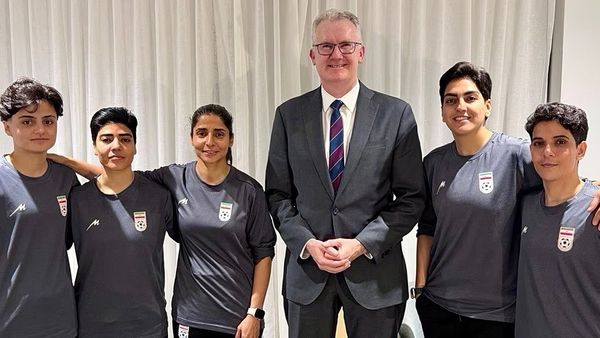
Australia Grants Asylum to Five Iranian Women Footballers After Leaving Team Hotel
Australia has granted asylum to five players from Iran’s women’s national football team after they left their hotel, citing safety fears following a reported protest and threats from Iranian state media. Interior Minister Tony Burke said offers remain open to other team members.
 Reliable
Afghanistan-Sri Lanka cricket series postponed amid Middle East conflict
A six-match cricket series between Afghanistan and Sri Lanka in the UAE has been indefinitely postponed due to Middle East conflict disrupting regional flights, with sources confirming boards' agreement though details on finality vary slightly.
 Reliable
Global Reach Supports US Designation of Afghanistan as 'Country of Unjust Detentions' to Pressure Taliban
Global Reach praised the US decision to designate Taliban-ruled Afghanistan as a 'country of unjust detentions,' viewing it as a message to release detained Americans including Mahmoud Shah Habibi. The move, based on a Trump executive order, highlights ongoing cases amid strained US-Taliban relations.