
SOCIETY — June 19, 2026
Reporters Without Borders Identifies Afghanistan as Primary Source of Exiled Journalists
The report indicates that at least 677 Afghan journalists have fled since 2021, with many now facing further risks including deportations from Pakistan, while the number of countries producing exiled journalists has risen from 19 to 40.
The Ehtebar Desk — originates with Amu TV — corroborated by Afghanistan International — 2 min read
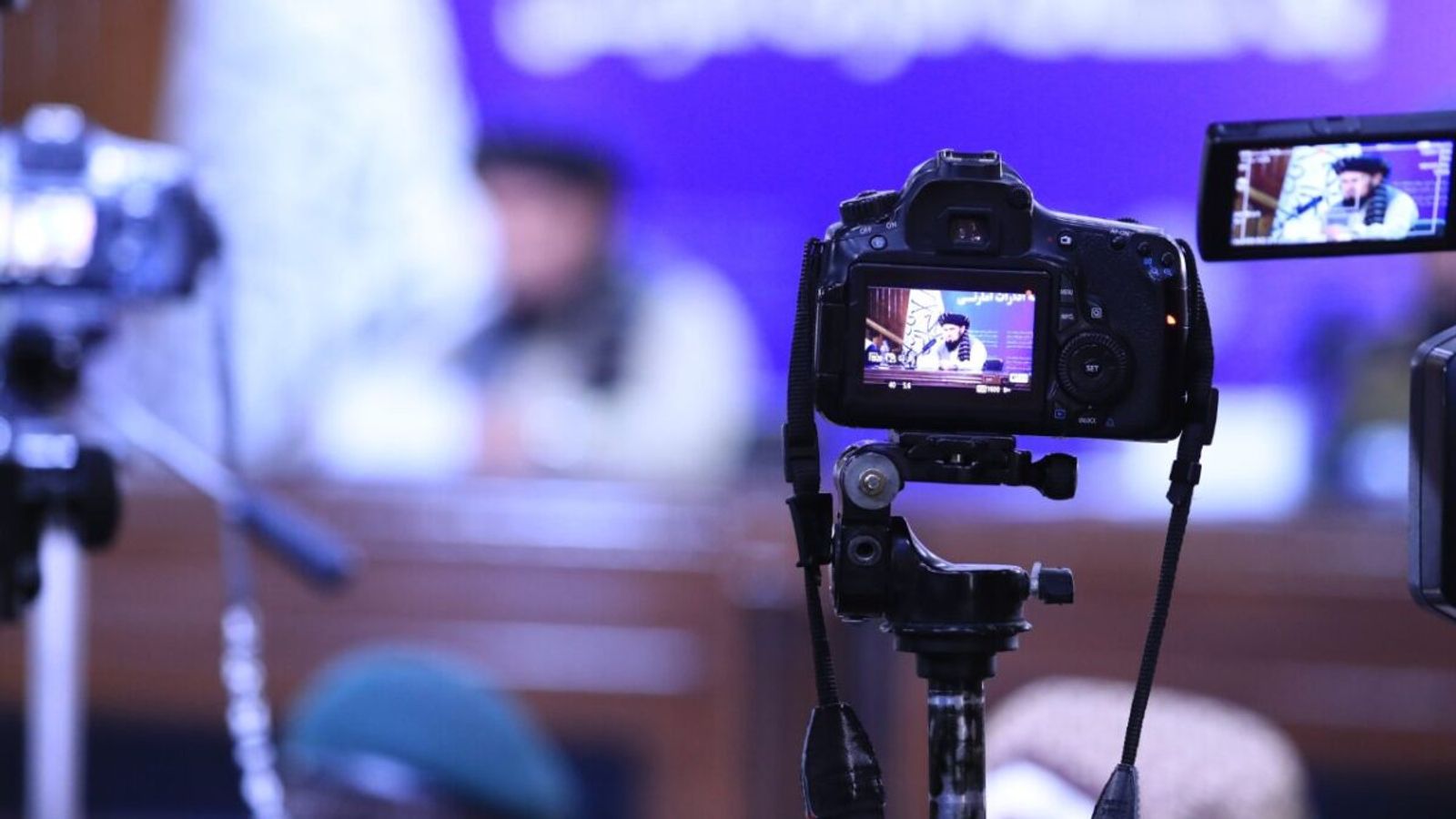
Reporters Without Borders has stated that Afghanistan has become the main source of exiled journalists globally. The organization reports that Afghan journalists account for nearly half of those it has supported in exile worldwide.
Since 2021, at least 677 Afghan journalists have fled the country because of threats, restrictions, arbitrary arrests, and suppression. The largest number left in 2022, when 183 journalists departed. Another 82 fled in 2025.
Many of these journalists have relocated to 28 different countries. In Pakistan, deportations have resulted in the return of at least 50 Afghan journalists to Taliban-controlled Afghanistan.
The report covers support provided to 1,468 journalists from 65 countries between 2021 and 2025. During this time, the number of countries with journalists entering exile increased from 19 to 40. Russia and Myanmar followed Afghanistan as sources, with 160 and 101 journalists supported.
Reporters Without Borders warns that the rise in exiled journalists from more countries endangers independent journalism and the availability of reliable information.
Read the original reporting at Amu TV →
Reliability assessment
Two independent outlets corroborate the core RSF report findings on Afghan journalist exodus numbers, timeline peaks, and global context with consistent attribution to the named organization and matching key figures (183 in 2022, 82 in 2025, Pakistan deportations). Minor numerical variations are typical reporting differences and do not undermine the corroborated event.
The source language mixes facts with framing or advocacy wording. Afghanistan International: "widespread restrictions, security threats, arbitrary arrests, and suppression of public space, conditions for media work have worsened severely"; "forcibly returned to Taliban-controlled Afghanistan, where the danger of arrest or suppression still awaits them"; "threats to journalists and restrictions on media work are expanding globally" — these phrases use strongly negative evaluative language to frame the situation as an intensifying crisis of oppression.; Amu TV: "global hub of exiled journalists", "widespread collapse of independent media", "forcibly returned" - these phrases frame the situation with strong negative judgment on the scale of the crisis and the actions of authorities.
Across the newsrooms
Where reports agree
- Afghanistan is the primary source of exiled journalists per RSF report, accounting for nearly half of supported cases
- Largest wave in 2022 (183 journalists); continued departures with 82 in 2025
- Global increase in source countries from 19 to 40; Russia and Myanmar rank next after Afghanistan
- Journalists face ongoing risks in host countries including Pakistan deportations
- Taliban restrictions post-2021 have driven media collapse and journalist exodus
Where reports differ
- Exact total supported journalists: >1400 from 65 countries vs precisely 1468
- Exact number of Afghan journalists: implied ~half vs explicitly 677
- Pakistan returns described as 'dozens' vs 'at least 50'
- Afghan journalists hosted in 28 countries (only Amu TV specifies)
Filed by 2 outlets
Amu TV
Originating
Framed
Framed
Afghanistan International
Framed
Framed
Filed under
Society — Reporters Without Borders, Afghan journalists, Taliban, media restrictions, exile
Spotted an error or have more on this story? Tip the desk on Telegram → or WhatsApp →.
Reader supported
Keep Ehtebar running
Every published story uses paid tools to translate reporting, compare sources, extract claims, and produce a clearer read on Afghanistan. Reader support helps keep that work independent.
€5
helps cover daily verification runs
€15
supports a week of source comparison
€50
keeps independent analysis moving
More in Society
Afghan Woman Recounts Being Stopped by Taliban at Border Over Mahram
— Unverified
Taliban Bar Dozens of Students from Exams in Kandahar Over Beards
— Developing
UN Special Rapporteur Criticizes Taliban Decree on Marital Separation
— Reliable
Construction of Four Intersections Completed in Mazar-i-Sharif City
— Reliable